
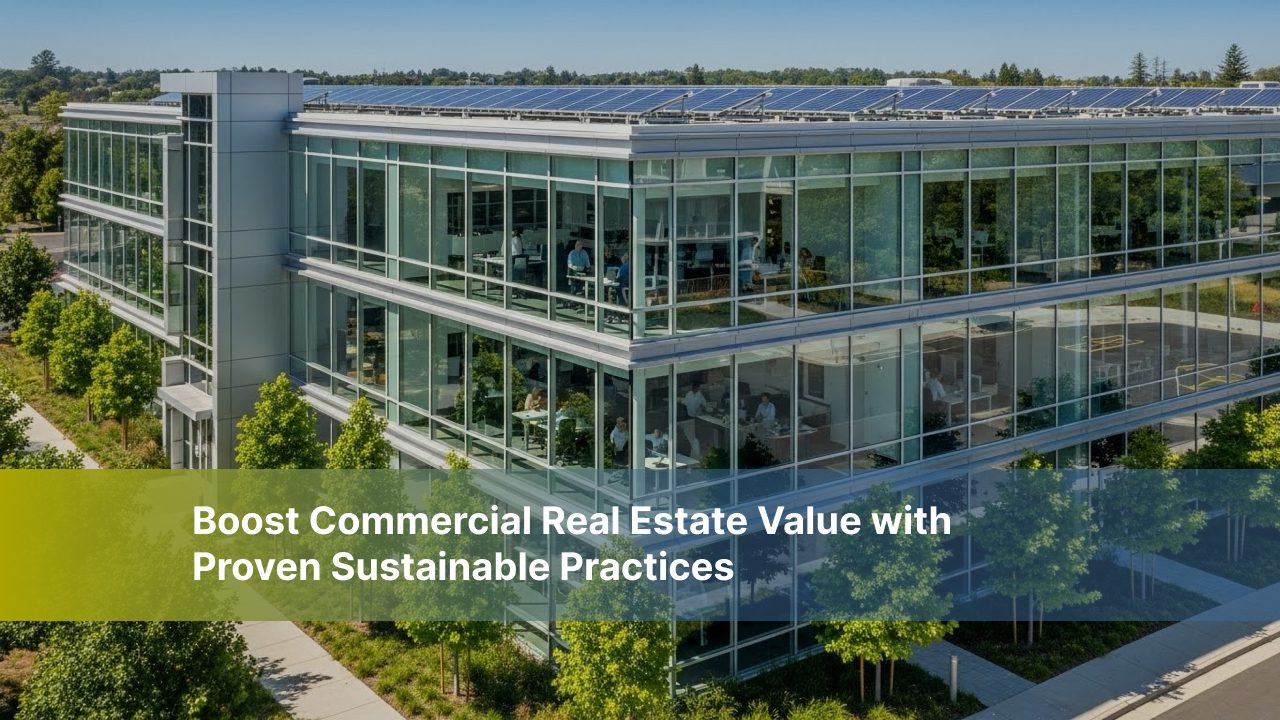
Commercial real estate sustainability is essential for maximizing returns on your next development, renovation, or management project. By implementing sustainable strategies, you can enhance property value while benefiting human health and the environment.
If you’re planning your next development, considering strategies for an upcoming renovation, or managing an existing build, how can you maximize the returns from the project and do something good for human health and the environment?
There are an array of strategies and methods to reduce environmental impact, limit energy and water consumption, increase demand and resale value, and improve your bottom line.
Reduced Operational Costs
The most pragmatic reason to pursue green strategies is to save money. If the methods you implement don’t contribute to a positive cash flow, it’ll be difficult to justify the measures to stakeholders in the project. Fortunately, it’s relatively easy and inexpensive to make short-term modifications and improvements that limit wasted energy and increase margins.
A simple measure is energy efficient lighting in the form of CFL and LED lamps that cut energy consumption by 76.7% and 88.3% respectively. This is a fairly obvious and common example, but it can save you a tremendous about on electricity when applied to the scale of a commercial building and all the interior and exterior spaces that require relatively intense lighting. Lighting is critical to the user experience and can have a very real impact on tenant comfort and appeal. According to the U.S. Energy Information Administration (EIA), lighting accounts for 10% percent of energy use in commercial buildings.
The greatest costs are attributable to space heating and cooling at 33% of typical energy expense as reported by the EIA. Low cost methods to cut costs are as simple as replacing air filters with the highest MERV value available. Restriction in airflow reduces HVAC system efficiency drastically. In the planning phases, give extra consideration to installing dual or triple-pane coated windows that have very low heat transfer and help keep indoor temperatures consistent regardless of outside weather. High R-value insulation is also crucial to maintain a thermal barrier that keeps funds in your account.
Improved Tenant Demand and Resale Value
While reducing energy costs is important, what’s even more crucial is creating a structure that meets the needs of the people that occupy it. No matter how efficient your structure is, if it doesn’t provide an environment that fosters good health and promotes greater productivity, it’s not likely to command a high rent or maintain a low vacancy rate. Tenants and buyers value comfort, ergonomics, functionality and a pleasant psychological environment.
A couple things to consider are thermal comfort, daylighting, and natural views (all of which will earn you LEED credits). Thermal comfort includes providing solar control (window coverings), zoned HVAC, and user controls in occupied spaces. Daylighting reduces artificial lighting requirements and also brightens the interior with natural light that lifts moods and inspires creativity. Another aspect of occupant comfort is proper ventilation, both during and after construction. Indoor air quality (IAQ) in an important factor in sustainability and has ramifications for human health, comfort, and the likely resale or lease value of your project.
There is so much to cover on the topic of commercial real estate value and sustainability, that we’ll have to break it down into more future posts. If you have any questions or comments, please feel free to leave them below. If you’d like to know how specific features can affect value from an appraiser’s perspective, please reach out and we’ll share all our knowledge and resources with you.


I do not even understand how I finished up right here, however I believed this publish was good.
I do not recognize who you’re however certainly you are
going to a famous blogger in case you are not already.
Cheers! https://Bocahickory.com/
I always spent my half an hour to read this website’s
articles everyday along with a cup of coffee. http://www.dominoqiu.link/ref.php?ref=NANANAQQ
Hello there! I just would like to give you a big thumbs up for the great information you
have got here on this post. I am coming back to your blog for more soon.
Hello! I’ve been reading your blog for a long time now
and finally got the courage to go ahead and give you a shout out from Porter Texas!
Just wanted to mention keep up the good job!